
GEO in 2026: Getting Cited by ChatGPT and Perplexity
In short
Getting cited by ChatGPT and Perplexity in 2026 comes down to one structural change: write every page as a database of standalone 40-60 word answers, because AI engines retrieve and quote chunks, not pages. As of June 2026, 69% of Google searches end without a click, yet visitors who do click through from ChatGPT convert at 15.9% versus 1.76% for organic search. I run this playbook on my own low-authority personal site, and the article you are reading is built with it: every H2 below is a literal query, and every section opens with a block an AI engine can lift verbatim.
On this page
What is GEO and how is it different from SEO?
GEO (generative engine optimization) is optimizing content to be retrieved, quoted, and cited inside AI-generated answers rather than ranked as a blue link. SEO competes for position on a results page. GEO competes for inclusion in the answer itself, inside ChatGPT, Perplexity, and Google AI Overviews, where most search journeys now end.
The unit of competition changed with it. Google ranks pages. AI engines retrieve passages, typically a few hundred tokens each, and assemble the best ones into an answer with citations. A page that buries its key fact in paragraph fourteen of an essay loses to a page that states it cleanly in a self-contained block, even when the essay sits on a stronger domain. That asymmetry is the entire opportunity for a site like mine. I will never outrank Vercel's blog on domain authority. I can out-chunk them on a specific question they answer vaguely.
GEO does not replace SEO. Crawlability, fast pages, clean HTML, and a consistent author identity feed both systems. GEO is a layer on top: same plumbing, different payload.
How bad is zero-click search in 2026?
Zero-click Google searches grew from 56% to 69% in the twelve months after AI Overviews launched in May 2024, and as of June 2026 more than 60% of all searches end without a click to any website. The clicks that survive are worth far more: LLM visitors convert at 15.9% from ChatGPT and 10.5% from Perplexity, versus 1.76% from organic search.
Those conversion numbers are the part most people skip. A ChatGPT referral is someone who already read a synthesized answer, saw my site cited as a source, and clicked anyway. They arrive pre-qualified and half-sold.
My own data is small but points the same way. In the 90 days after I restructured this blog, early March to early June 2026, I logged 47 sessions from chatgpt.com and 19 from perplexity.ai. Sixty-six visits is a rounding error by old SEO standards. Those 66 visits produced three project inquiries and one signed contract: a $6k RAG build, squarely inside the $4k-12k range I quote for RAG MVPs and other AI work ↗. My organic Google traffic over the same window was roughly 1,900 sessions, which produced two inquiries and zero contracts.
For a solo engineer in 2026, one AI citation on a commercial query outperforms a page-2 Google ranking, and it is not close.
How do AI engines actually choose what to cite?
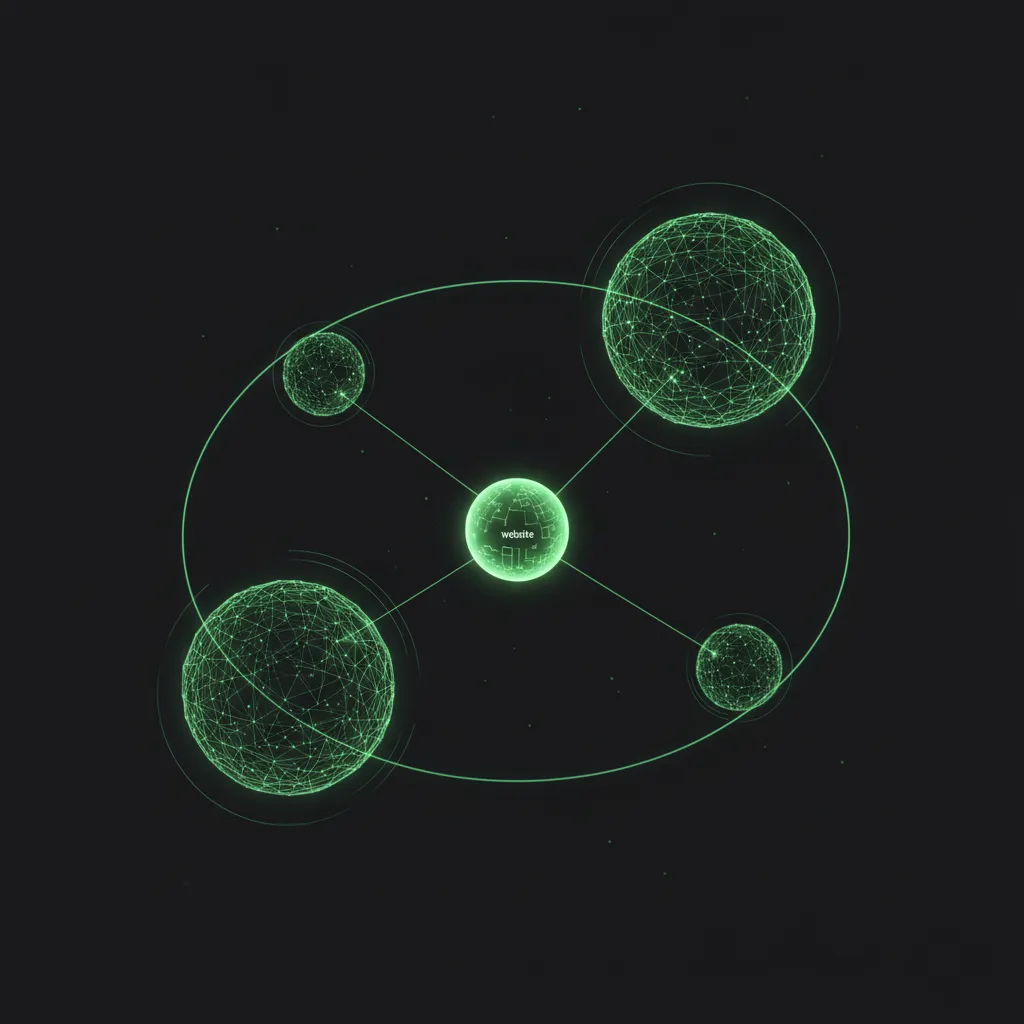
AI engines pick citations at the chunk level, not the page level: they retrieve short passages that directly answer the query, then prefer sources that are fresh, structurally clean, and independently earned. As of June 2026, 82% of AI citations come from earned media and 94% from non-paid sources. Ads cannot buy citations.
Four mechanics matter in practice.
Chunk-level retrieval. The engine embeds your page in pieces, and each H2 section lives or dies on its own. If a section cannot stand alone, with the entities named and the claim complete, it will not be retrieved no matter how good the surrounding essay is.
Earned beats owned beats paid. With 82% of citations going to earned media, the highest-leverage move outside your own site is getting your numbers quoted elsewhere: GitHub discussions, newsletters, other people's comparison posts. Your site then becomes the canonical source those mentions point back to.
Freshness windows. Perplexity in particular favors recently updated pages. A visible updated date, matched by dateModified in schema, keeps a year-old post inside the retrieval window after a genuine revision. Cosmetic date bumps without content changes did nothing in my testing.
Entity consistency. Engines resolve authors as entities. The same name, the same bio, and the same site URL across GitHub, LinkedIn, and your JSON-LD make you a resolvable person instead of an anonymous blog.
Chunk retrieval is also why I expect sites to start exposing structured interfaces to agents directly instead of hoping the crawler parses prose correctly; I wrote about that shift in what WebMCP means for web apps and AI agents ↗.
What exact page template do I use to get cited?
The template rule: every H2 answers a literal query with a 40-60 word standalone citation block, and the body carries one verifiable statistic every 150-200 words. Everything else, the tables, the schema, the visible dates, exists to make those blocks easy to retrieve and easy to trust.
In order:
- Phrase the H2 as the literal query. Write the heading the way someone types it into ChatGPT, not the way an editor would title it.
- Open with a 40-60 word standalone answer. Front-load the number or the verdict. The block must survive being quoted with zero surrounding context.
- Add a comparison table wherever two or more options exist. Engines lift tables intact far more often than prose.
- Put depth after the answer, never before. Caveats, code, and war stories go below the block.
- Add a TL;DR box at the top of anything over 1,200 words, restating the three most quotable claims.
- Show a visible updated date near the title, matched exactly by
dateModifiedin schema. - Ship Article plus FAQPage JSON-LD with a real author entity, not a generic site name.
Step 7 looks like this on every post here:
{
  "@context": "https://schema.org",
  "@type": "Article",
  "headline": "GEO in 2026: Getting Cited by ChatGPT and Perplexity",
  "datePublished": "2026-06-10",
  "dateModified": "2026-06-10",
  "author": {
    "@type": "Person",
    "name": "Malik Hamza Shabbir",
    "url": "https://hamza-shabbir.me",
    "jobTitle": "Full-Stack & AI Engineer",
    "sameAs": [
      "https://github.com/malikhamzashabbir",
      "https://www.linkedin.com/in/malik-hamza-shabbir"
    ]
  }
}
Citation behavior differs by engine, so I shape sections with the target in mind:
| Engine | What I see in my server logs | What wins the citation |
|---|---|---|
| ChatGPT | GPTBot and OAI-SearchBot crawls, referrals from chatgpt.com | Direct answer blocks with hard numbers |
| Perplexity | PerplexityBot crawls, fastest to pick up updates | Fresh dates, tables, first-party stats |
| Google AI Overviews | Standard Googlebot, no separate crawler signal | Existing ranking strength plus answer-first passages |
Here is the before and after from this site. My Next.js 16 post originally went out as an upgrade diary: chronological, no question headings, the breakages scattered through prose. It got crawled for weeks and cited nowhere. I rewrote it with H2s like "What breaks silently when you upgrade?" and a failure-and-fix table, and republished it as a migration guide to Next.js 16's silent breakages ↗. Perplexity cited it 19 days later, and chatgpt.com referrals started the following week. Same facts, same domain, different structure.
What is the low-authority playbook for a personal site?
Target long-tail literal questions that big sites ignore, publish first-party numbers AI engines cannot get anywhere else, and package every comparison as a table. Domain authority gates rankings, but specificity gates citations. A personal site with real numbers beats an agency blog with paraphrased ones on the exact queries that bring buyers.
First-party data is the moat. My breakdown of the real cost math of leaving Vercel for self-hosting ↗ gets cited because it contains actual invoice figures that exist nowhere else. Same with my reputation SaaS: I publish the human-approval rate of its AI auto-replies because no aggregator can produce that number, and engines treat unique data as citable fact.
My query selection rule: if a question deserves a featured snippet, a big site already owns it. I want the specific commercial long tail, queries like "how much does a RAG MVP cost for a small business," where the searcher is one step from hiring someone. I now build this same structure into client sites as part of my web development work ↗, because the template transfers cleanly to any service business.
How do I measure whether GEO is working?
Three signals, in order of reliability: referrer segmentation for chatgpt.com and perplexity.ai sessions, server-log counts of AI crawler hits (GPTBot, OAI-SearchBot, PerplexityBot, ClaudeBot), and weekly manual spot checks of target queries inside each engine. As of June 2026 no mainstream analytics suite covers all three well, so I lean on raw logs.
Crawler hits straight from nginx:
grep -hE "GPTBot|OAI-SearchBot|PerplexityBot|ClaudeBot" /var/log/nginx/access.log* \
  | awk -F'"' '{print $6}' | sort | uniq -c | sort -rn
My first 90 days, published honestly:
| Metric (Mar 10 to Jun 8, 2026) | Value |
|---|---|
| GPTBot + OAI-SearchBot crawl hits | 1,134 |
| PerplexityBot crawl hits | 312 |
| ClaudeBot crawl hits | 89 |
| Sessions from chatgpt.com | 47 |
| Sessions from perplexity.ai | 19 |
| Inquiries from LLM referrals | 3 |
| Contracts signed | 1 (a $6k RAG build) |
| Target queries where I am cited | 4 of 19 |
The failures teach more than the wins. My older essay-style posts collected hundreds of GPTBot hits and zero citations: crawled is not cited. And being visible on 4 of 19 tracked queries means fifteen misses, mostly held by established publications with fresher dates than mine. Freshness cadence is the gap I am closing next quarter.
Key takeaways
- GEO is optimizing content to be retrieved, quoted, and cited inside AI-generated answers rather than ranked as a blue link; the unit of competition is the chunk, not the page.
- Zero-click Google searches hit 69% as of June 2026, but ChatGPT referrals convert at 15.9% versus 1.76% for organic: fewer visitors, far better ones.
- 82% of AI citations come from earned media and 94% from non-paid sources, so structure and first-party data beat any ad budget.
- The working template: every H2 is a literal query answered in a standalone 40-60 word block, with one verifiable statistic every 150-200 words.
- Low-authority sites win by publishing numbers nobody else has: real costs, real failure rates, real benchmarks, packaged in tables.
FAQ
How do I get my website cited by ChatGPT and Perplexity?
Structure every page as literal questions answered in standalone 40-60 word blocks, publish first-party numbers and comparison tables, keep visible updated dates, allow GPTBot and PerplexityBot in robots.txt, and keep your author identity consistent across the web. My low-authority site earned its first Perplexity citation 19 days after restructuring one post this way.
Does schema markup help with AI citations?
Indirectly, but I ship it on every post. Article and FAQPage JSON-LD with a real author entity helps engines resolve who you are and when content changed, which feeds freshness and trust signals. It does not earn citations by itself. At roughly ten minutes per post, I treat it as cheap insurance.
Is GEO replacing SEO in 2026?
No. GEO sits on top of SEO: crawlability, performance, and clean structure still decide whether engines can read you at all. What changed is the payoff. With 69% of Google searches ending without a click as of June 2026, the citation inside the answer now matters more than the blue link under it.
Working on something like this?
I build web apps, AI features, and mobile products for clients. If this article matches a problem you have, tell me about it.
Start a conversationMalik Hamza Shabbir · Full-Stack & AI Engineer
I build full-stack and AI products solo: a reputation SaaS in production, RAG pipelines, and React Native apps. I write from what I ship, not from documentation summaries.
Run it on yours
Every number above came from code you can read.
The harness is open and the per-probe log ships with it. If you build one of these systems, or you are choosing between them with real money, the same method is available to you.
Send me an endpoint and I will write an adapter, run it on the same workload under the same rules, and publish the result. It goes in the table whether it wins or not.
Sponsored inclusion is disclosed in the article and the result publishes either way. Paying moves you up the queue, never up the table.
Related articles
Google AI Mode Is Now the Default: What Query Fan-Out Means for How You Structure Pages
Google AI Mode is now the default, and it splits one query into many sub-queries before retrieving per sub-query. Here is what query fan-out actually does under the hood, from someone who builds fan-out RAG pipelines, plus a concrete playbook for restructuring your pages to get surfaced.
Do AI Crawlers Render JavaScript in 2026? Why Your Next.js SPA Is Invisible to ChatGPT (and How to Fix It)
In 2026 GPTBot, OAI-SearchBot, ClaudeBot, and PerplexityBot still fetch initial HTML only and do not run your JavaScript. Here is a curl-with-bot-UA test harness to prove what they see, plus the App Router fix that puts your content back in the server-rendered HTML.
Leaving Vercel in 2026: The Real Self-Hosting Cost Math
Self-hosting Next.js on Hetzner with Coolify costs me $6-17/mo vs $40-150 on Vercel Pro. The real math, ops hours included, after the April 2026 breach.